Case Study / Web3 Gaming Platform
QUBIC Games — Designing a Play-to-Earn Platform with Claude Code
A solo two-week build: 12 skill-based games, a wallet-connected credit economy, and a community platform designed to support the QUBIC blockchain.

QUBIC Games is a community-driven, browser-based skill-game platform built to test QUBIC's newly published SDK and to give the blockchain a fun, tangible front door — a real product, not a demo, designed and shipped solo in two weeks with Claude Code as engineering partner.
From Feasibility Test to Real Product
QUBIC had just published its SDK. Instead of a technical demo, the goal was to build something real — a project spanning Product, UX/UI, Game Design, and Crypto at once, while supporting a blockchain I genuinely believe in:
- Fast, feeless transactions
- Useful Proof of Work (uPoW)
- A community project, with no direct affiliation to the QUBIC foundation
A games platform, because games are what get people to actually connect a wallet.
The Challenge
Build a credible skill-game platform, alone, on top of a freshly released blockchain SDK, with real credit stakes and a wallet-based economy:
- — Is the wallet connection flow trustworthy and frictionless?
- — Can a solo designer ship enough content to feel like a real platform, not a prototype?
- — Can AI-assisted development hold up under non-standard, highly specific game rules?
Moving from a single working prototype to a 12-game, wallet-connected economy.
My Role
Lead Product Designer & Design Engineer
I owned the product end to end — design, rules, content and, out of necessity, a good part of the technical decision-making — with Claude Code executing.
My role covered:
- check_circleproduct & game design
- check_circleUX flows & rule-writing
- check_circleUI & brand system
- check_circledomain, DNS & database calls
- check_circleQA & security audit direction
- check_circleClaude Code prompting
- check_circlesound & asset direction
Not being an engineer, I had to lean on Claude Code for the technical execution — but the UX was mine to lead, not the other way around. Along the way I picked up, or dusted off, domain names, SQL, databases and DNS — closer to a Design Engineer than a pure designer this time.
Validating the Concept
Before committing to a full platform, the first goal was to prove the core loop could work at all: connect a wallet, spend credit, play, and cash out.
Wallet Connection
Testing the QUBIC SDK end to end for a trustworthy connect flow.
Reflex Tap
A simple arcade game to prove credits, scoring and retries could work in the browser.
Simple Rules
Scoring, free retries — kept intentionally minimal for the first pass.
Cashout
Players who don't enjoy the game can recover their QUBIC at any time.
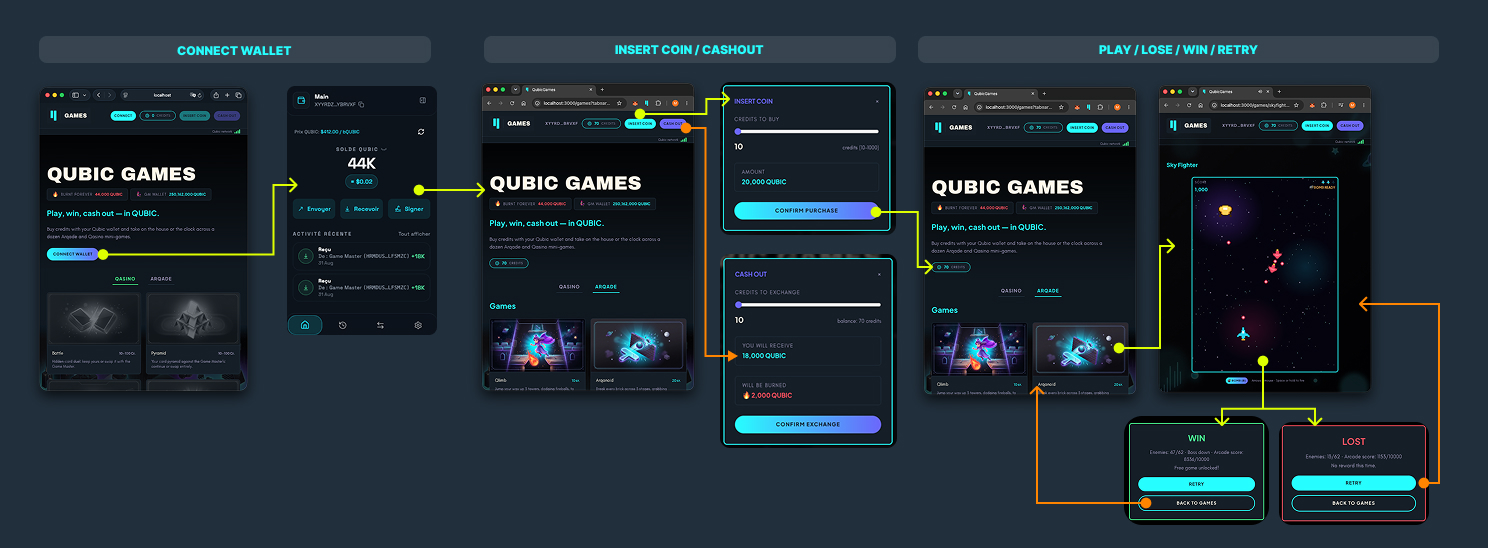
For this first iteration, Claude Code drove the visual direction on its own — a black background, neon buttons, a classic arcade look. Design wasn't the point yet: the goal was to prove the loop worked end to end. It did, and that's what unlocked the decision to keep going.
Twelve Games, Two Ways to Play
Claude Code usually had the base mechanic of a genre down cold — the real work was specifying the personal twists and testing them until they felt right. Six arcade games came first; once that side felt solid, browser mini-games alone still couldn't match the polish of a Candy Crush-style mobile title, so a second way to play followed: card games against the platform's own Game Master.
Arcade
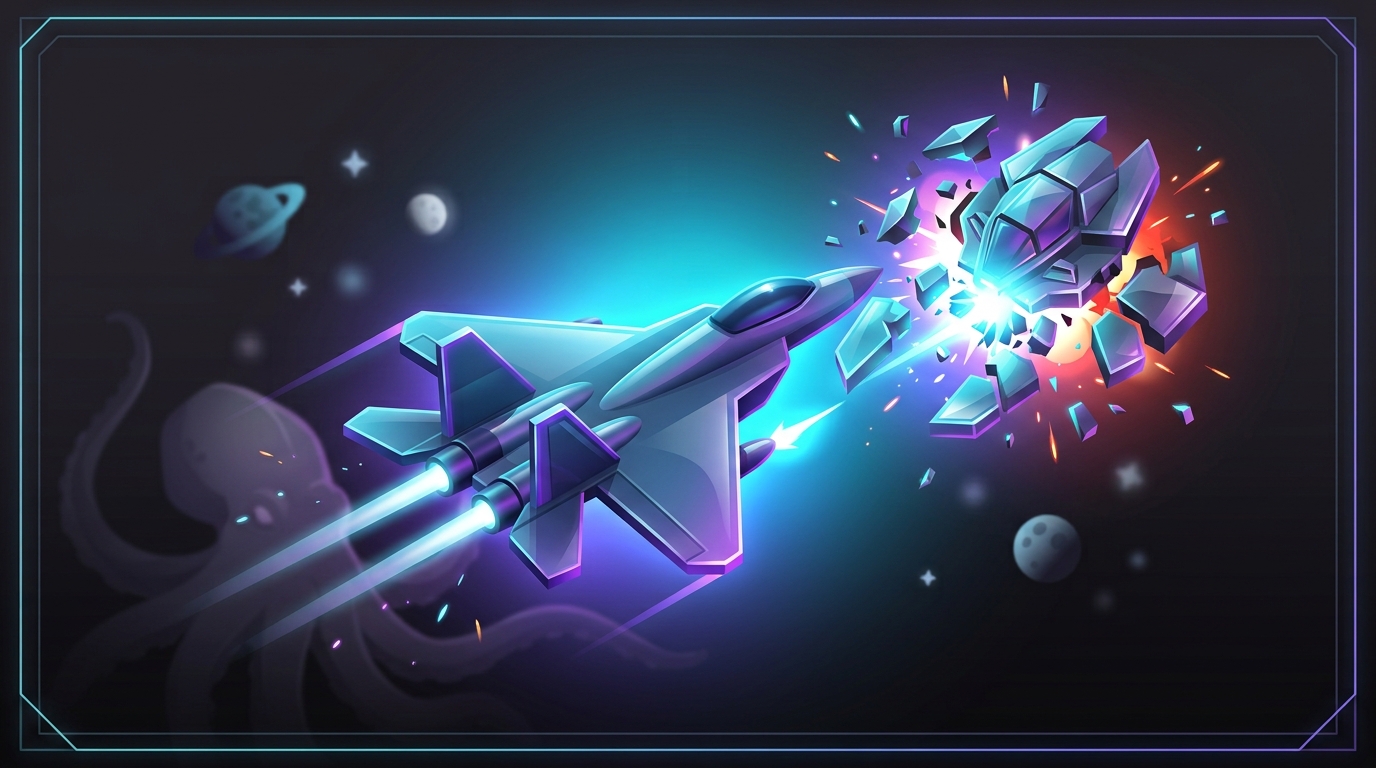
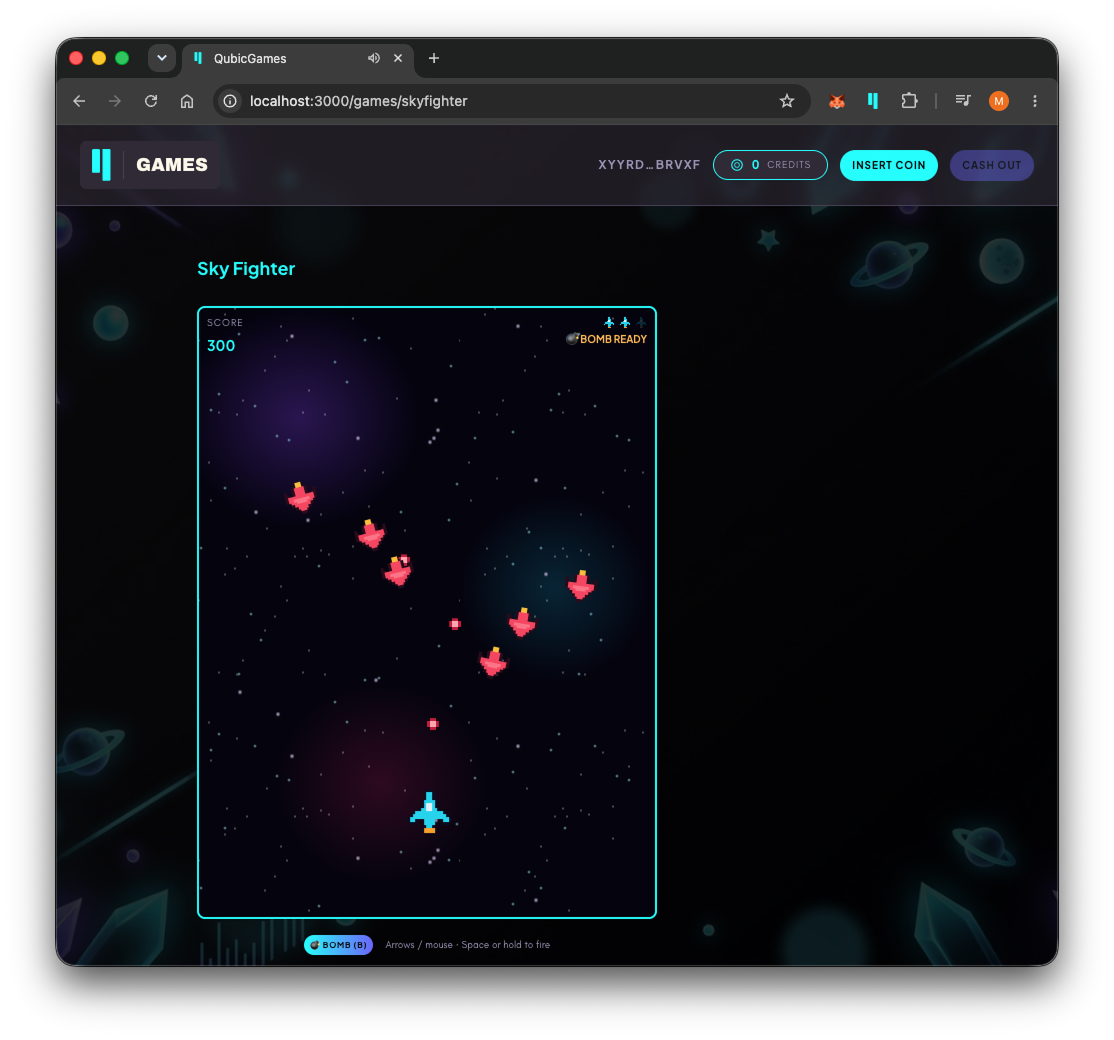
Skyfighter
A vertical-scrolling shooter: pilot a fighter jet through deep space, dodging missiles and enemy fire while blasting a path through everything in your way.
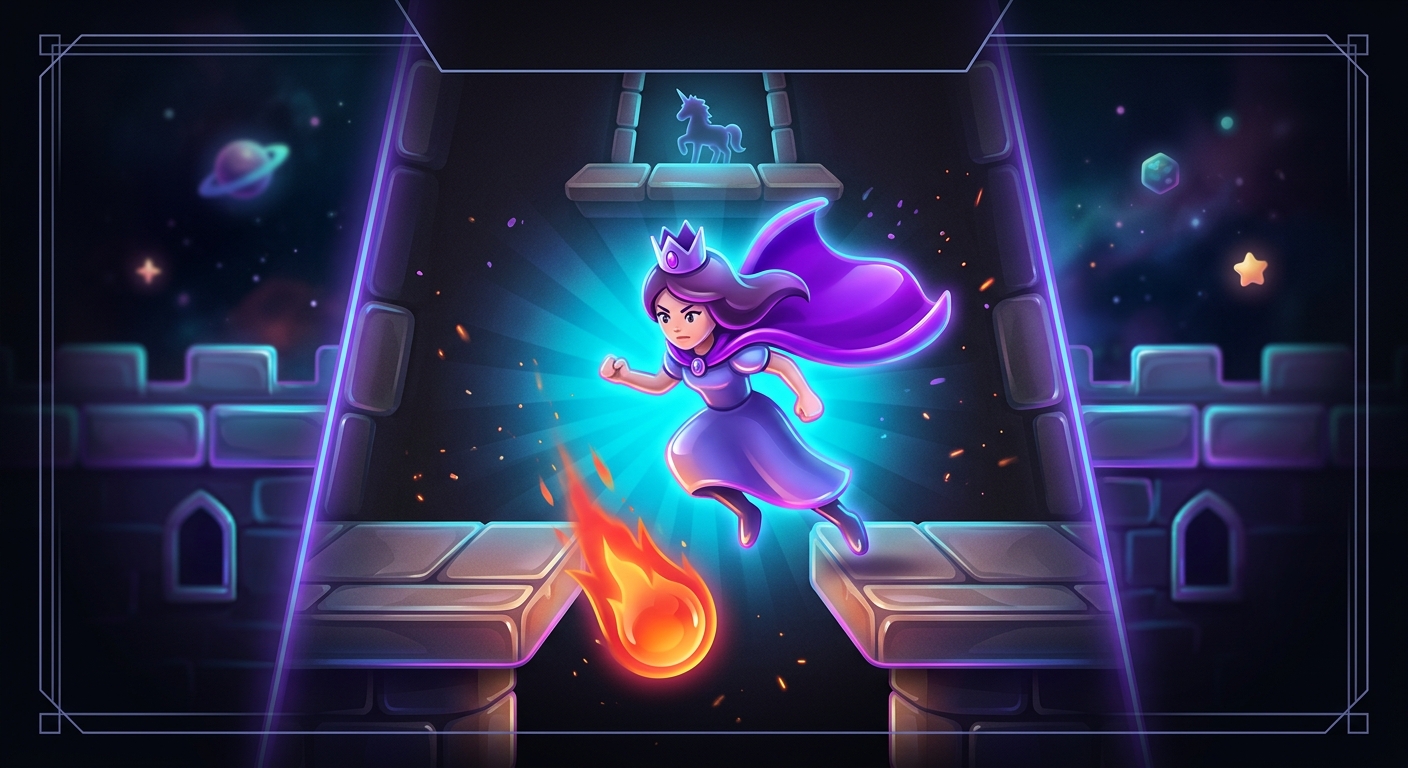
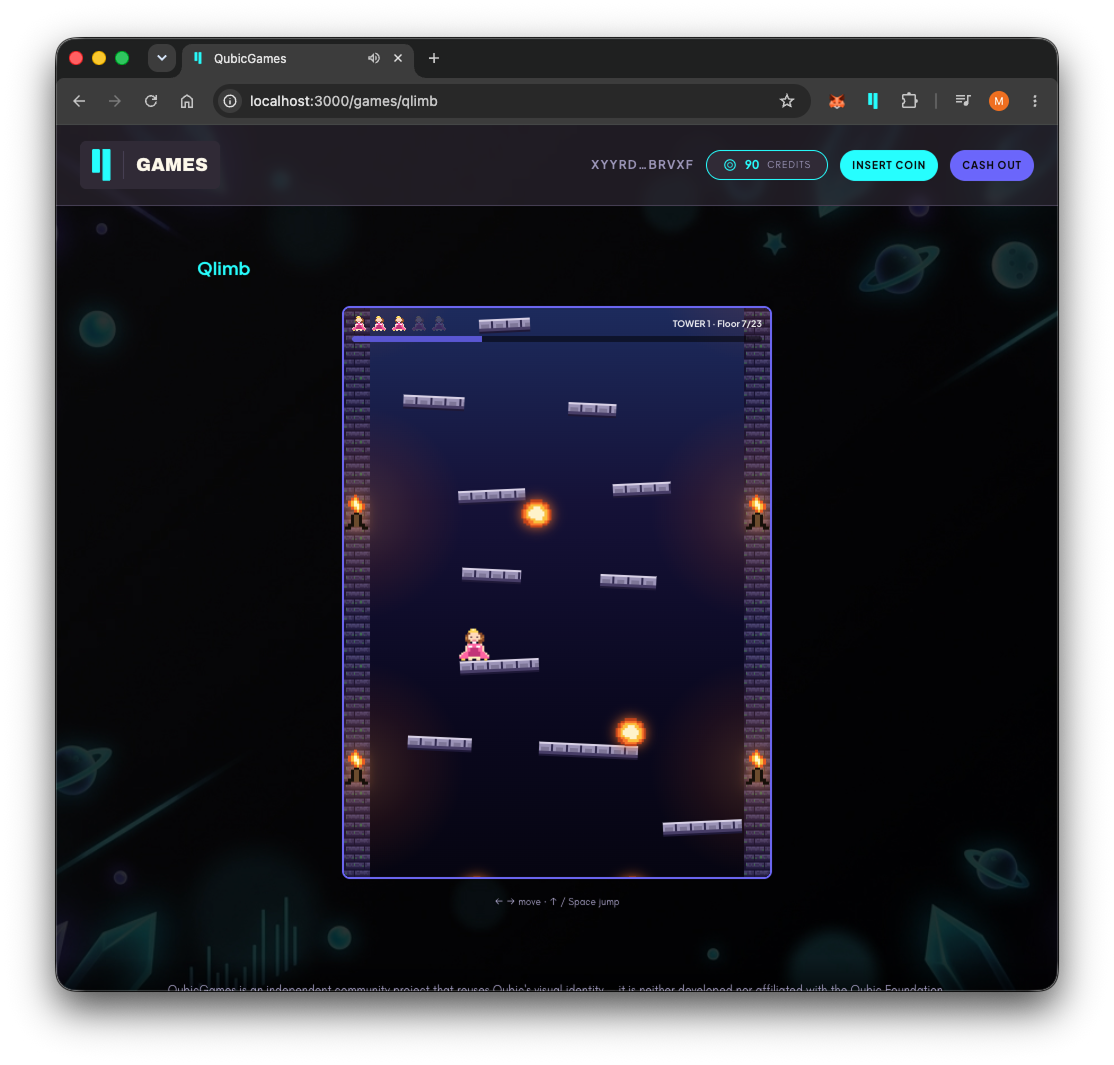
Qlimb
A princess platformer set inside a crumbling tower: leap from ledge to ledge, dodge fireballs and hazards, and climb your way up to rescue her captured unicorn.
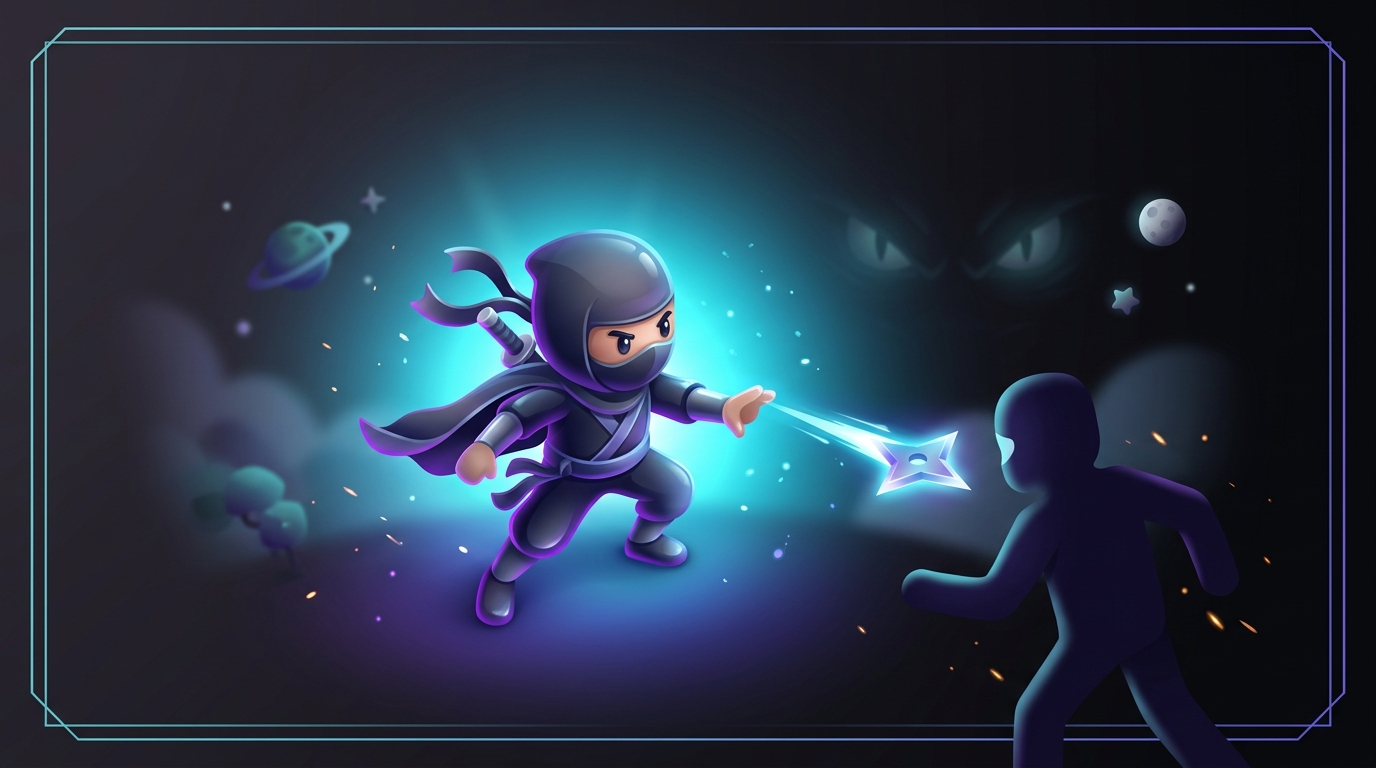
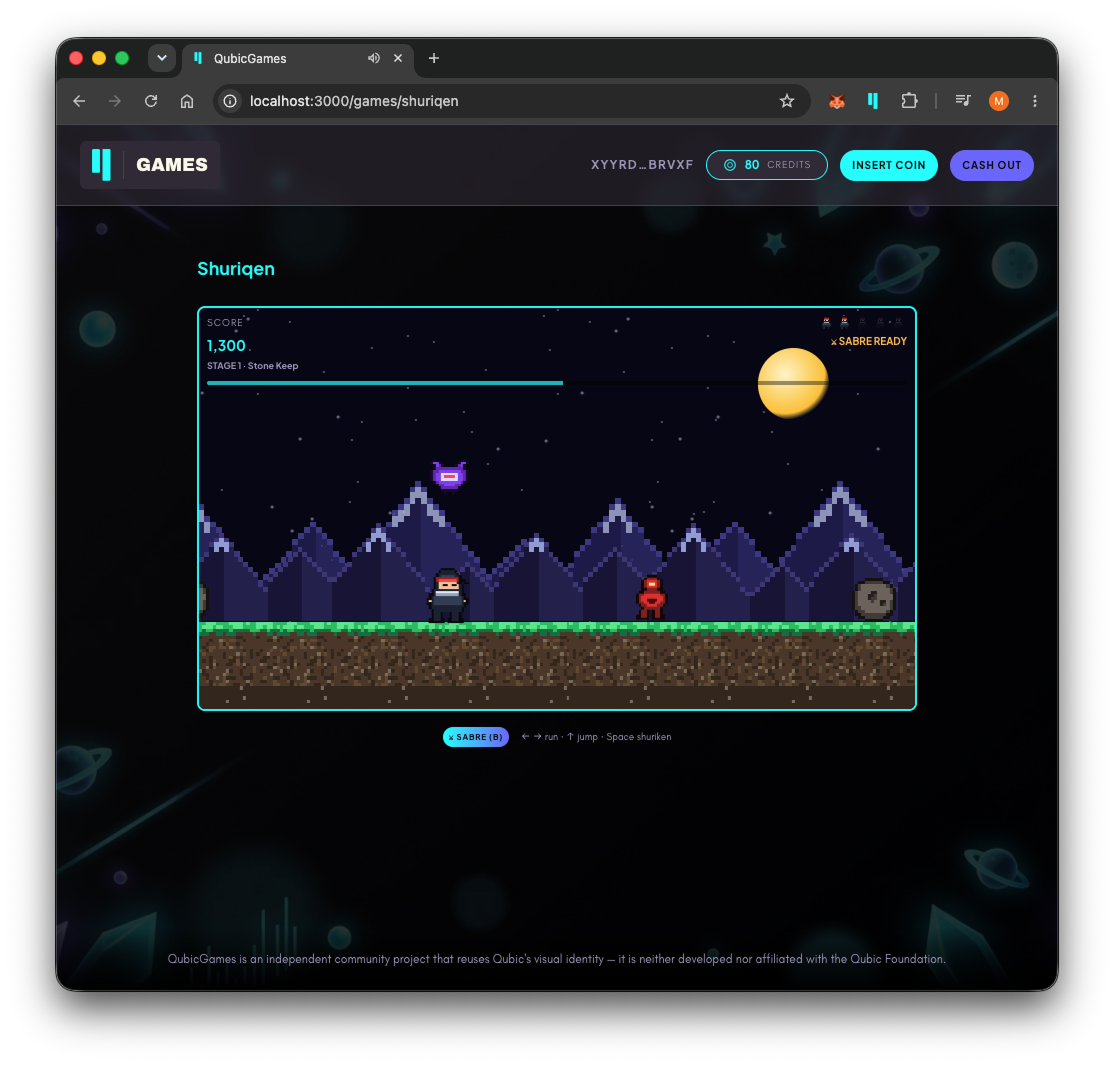
Shuriqen
A shinobi side-scroller played on a single horizontal plane: throw shuriken at incoming enemies and survive long enough to face down a dragon boss.
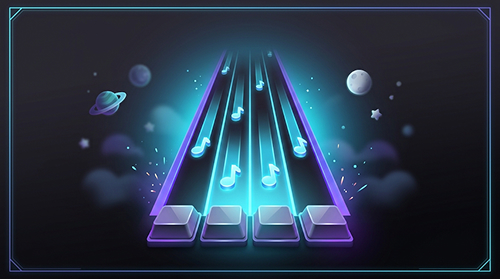
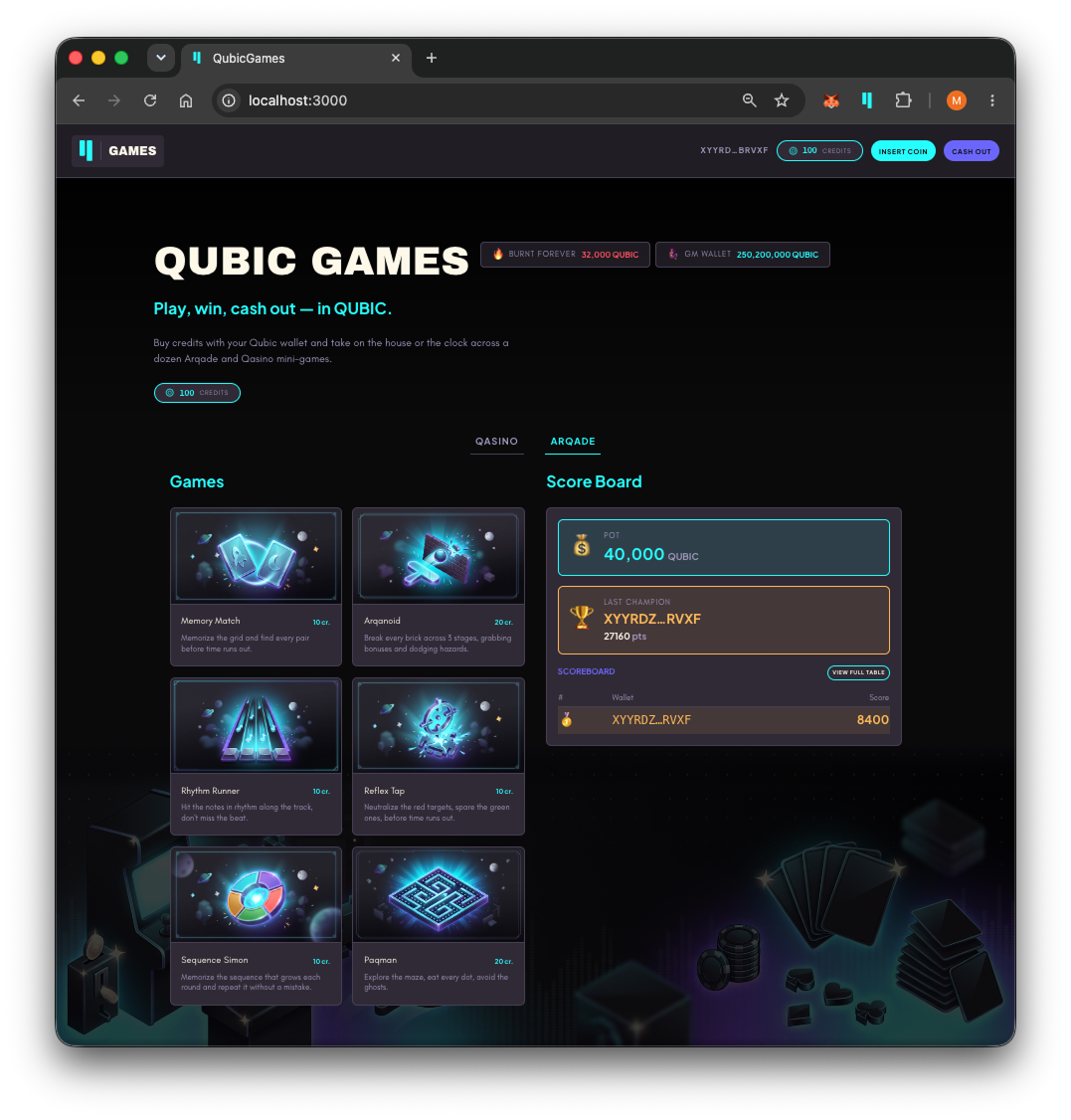
Rhythm Runner
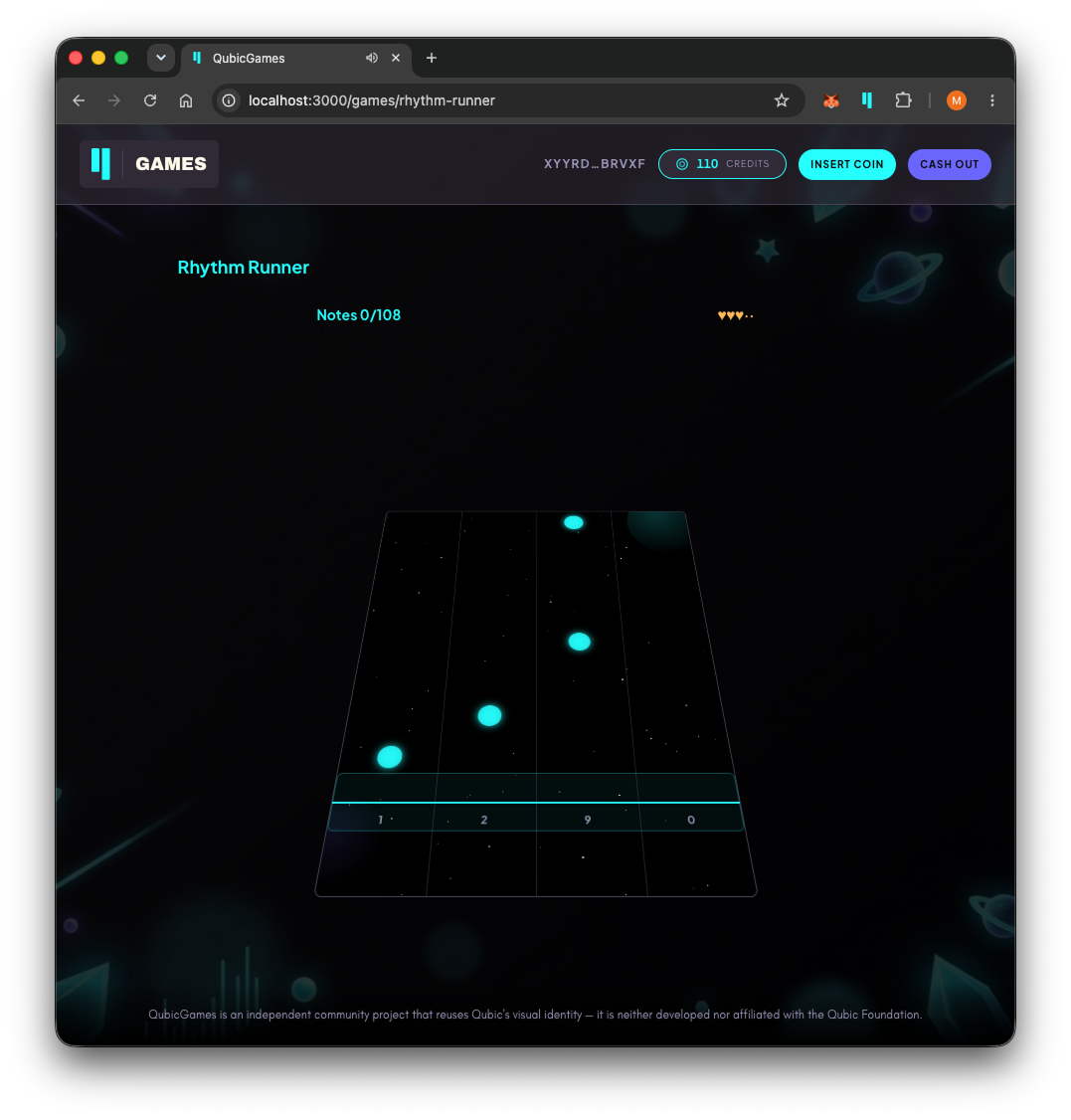
The most technically demanding of the six — BPM-synced background music, keyboard and tap input, poison malus tiles, a bomb, and a trapeze-style rotation so notes feel like they're approaching from a distance.
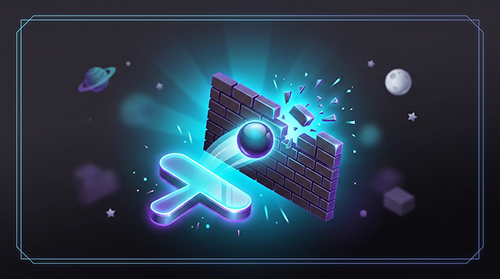
Arqanoid
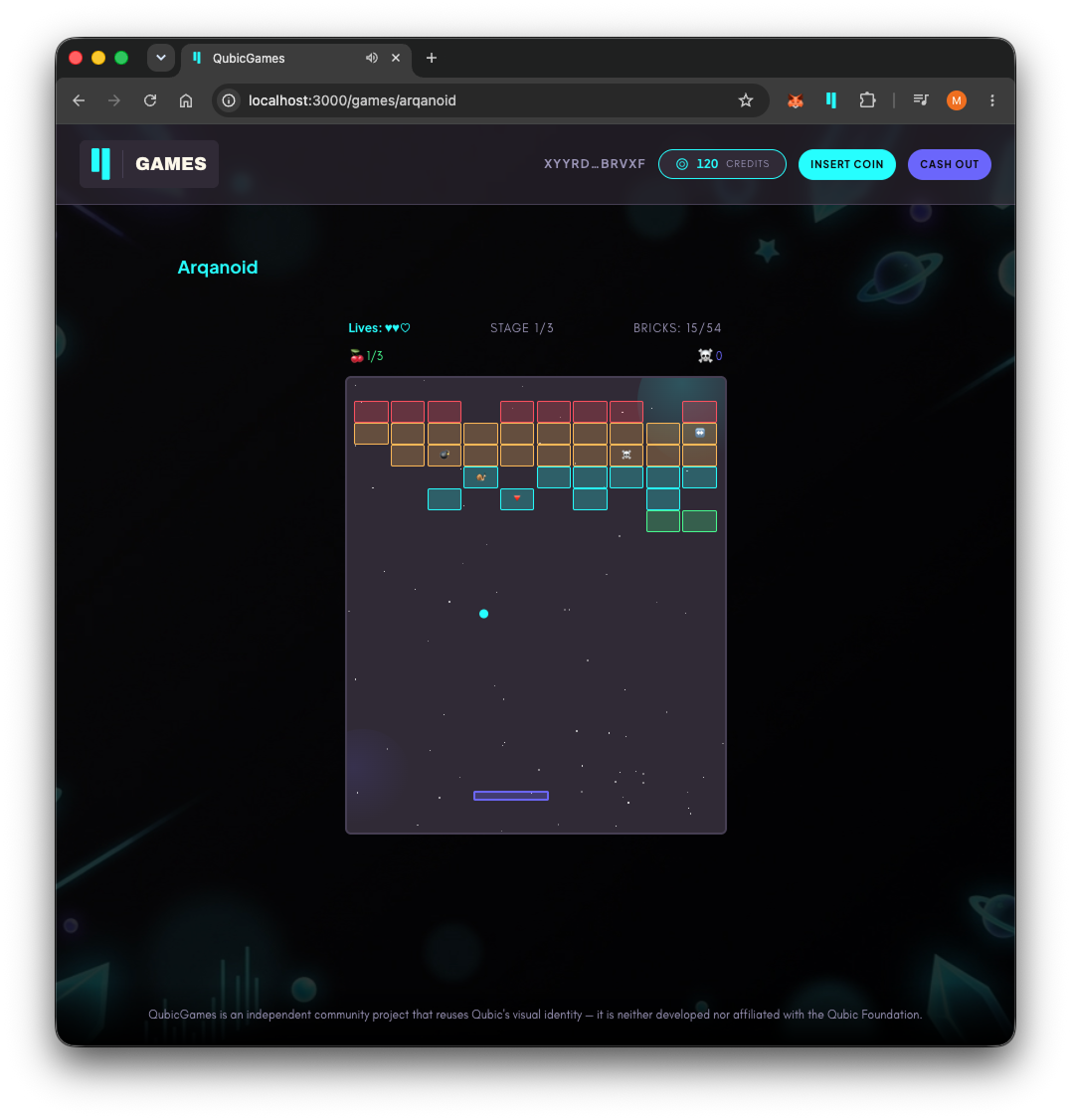
A three-stage Arkanoid-style breakout with bonuses and malus, playable on keyboard or mouse — and, in true QUBIC fashion, Qs worked into the level design.
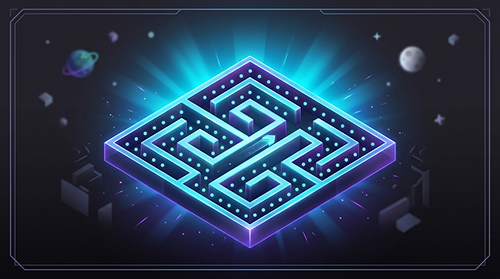
Paqman
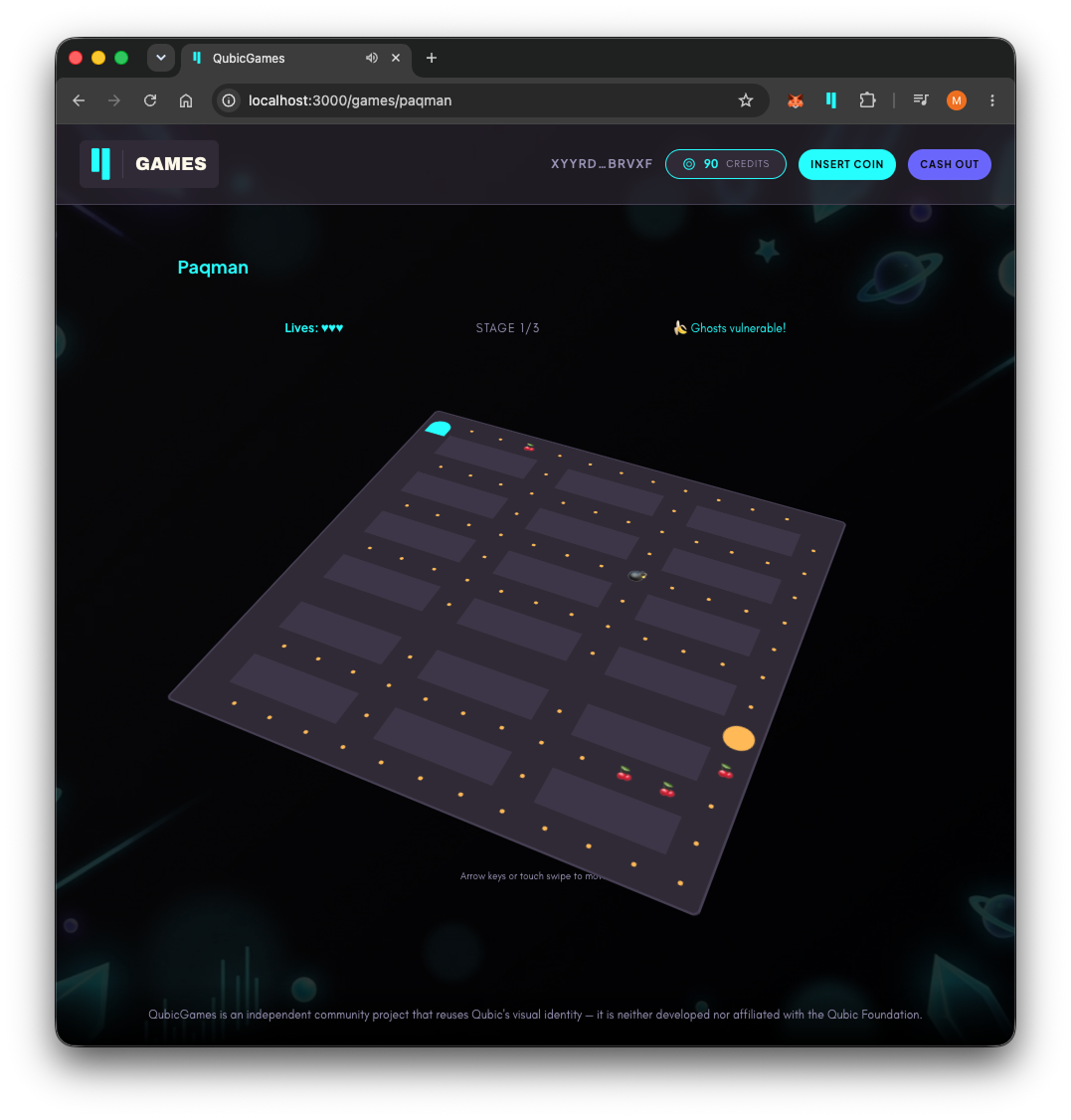
A pared-back maze chaser with a single ghost, bonus and malus pickups, and an isometric-style 3D effect on the labyrinth.
Versus the Game Master

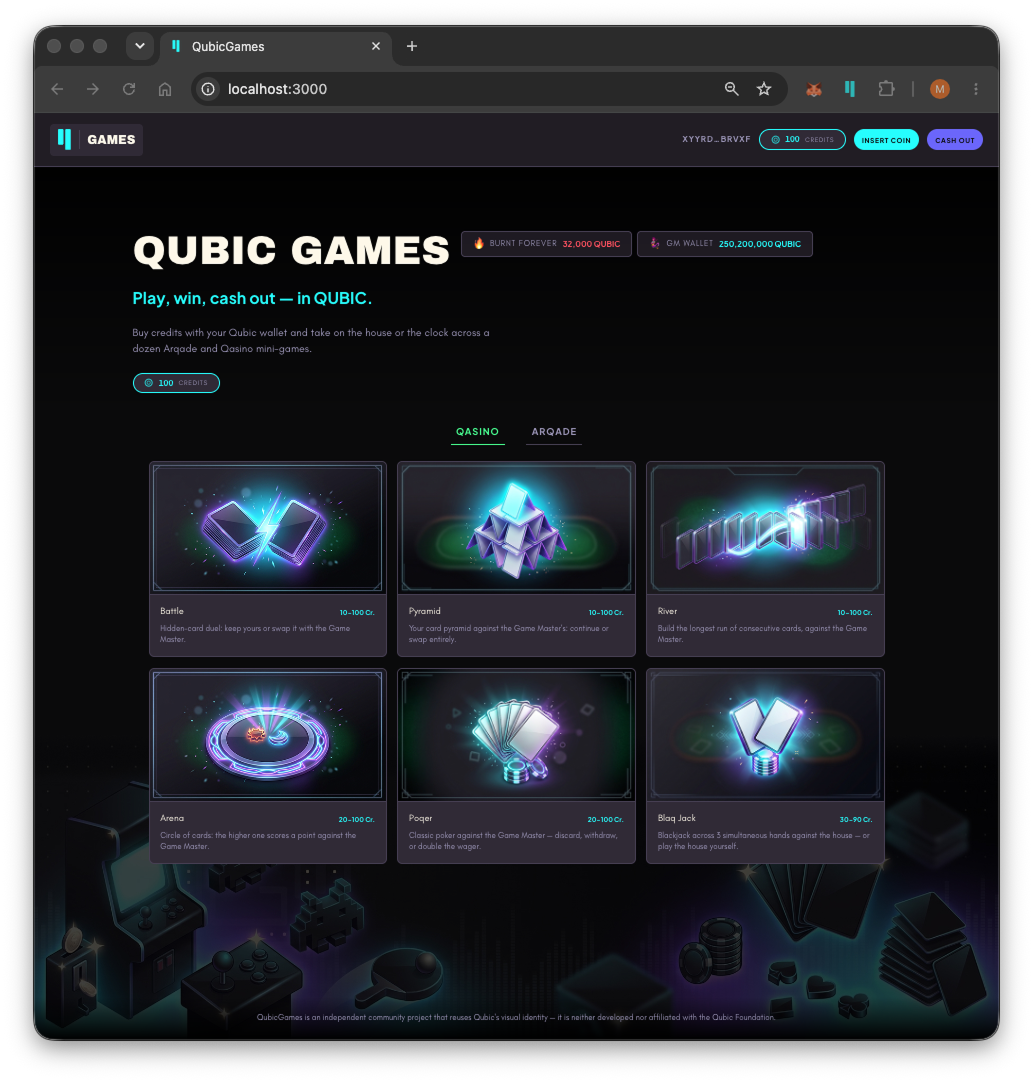
Battle
A 3-card take on classic War, with doubles cancelling out, three-of-a-kind paying x10, and a swap rule that hands the player far more control than a standard War variant.
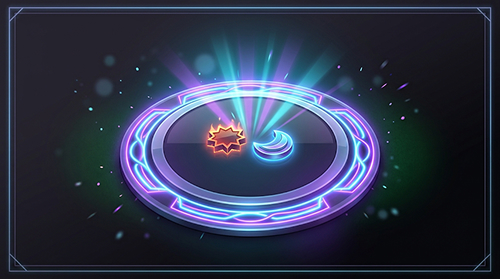
Arena
Cards are dealt in a circle, and each side chooses in turn which card to send into the arena — a more interactive take on Battle, with a withdraw option (half credits) versus doubling the stake.
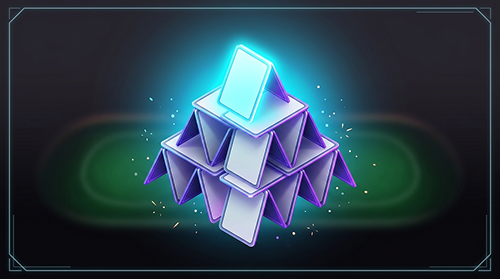
Pyramid
Cards meet on the battlefield 1v1, then 2v2, then 3v3, keeping the doubles, three-of-a-kind and opening swap rules. The hardest game to spec — a low-fidelity Figma flow was needed to get the UX and rules across to Claude Code.

Poqer
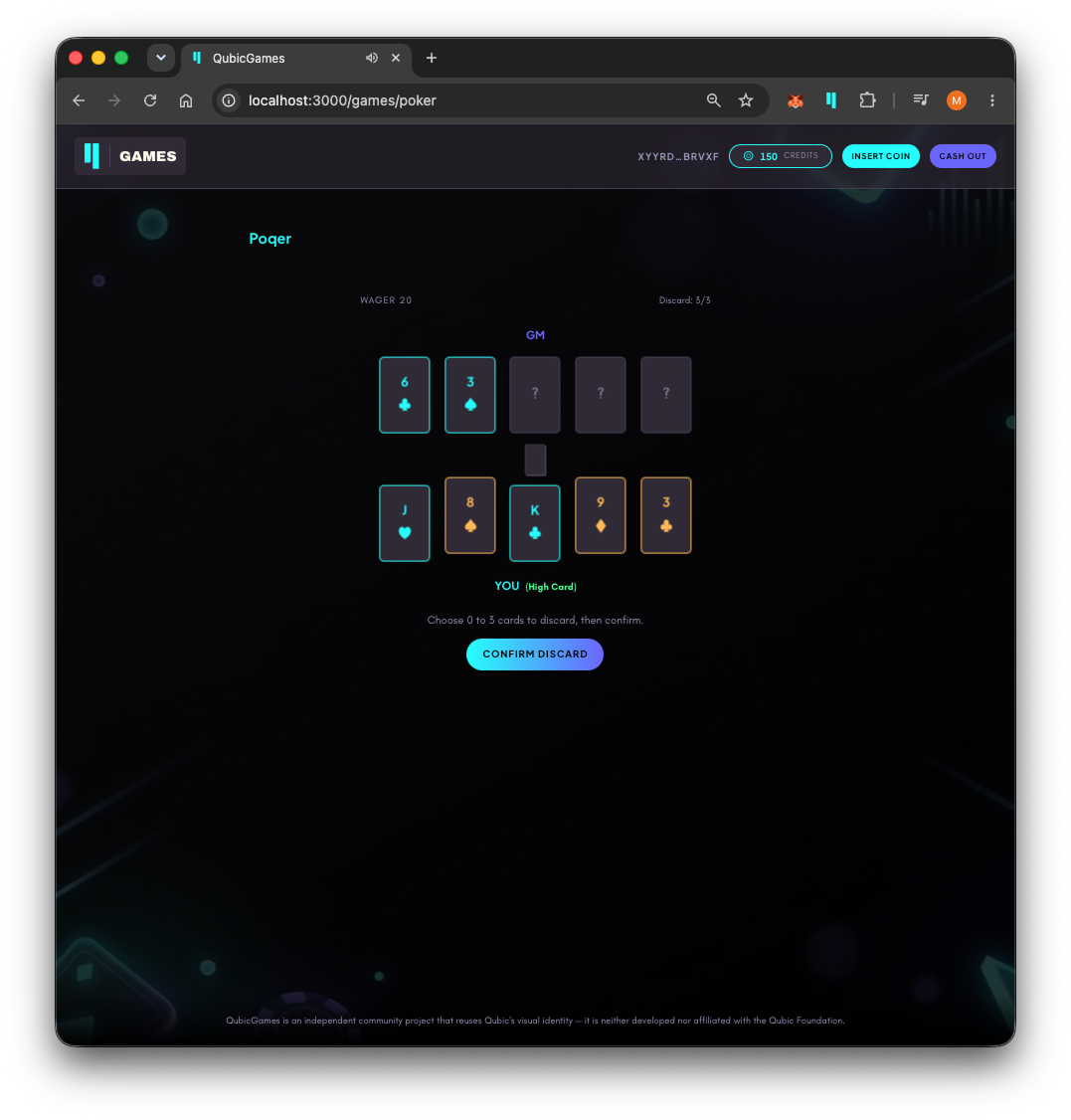
A poker variant against the Game Master, tuned with its own house rules.
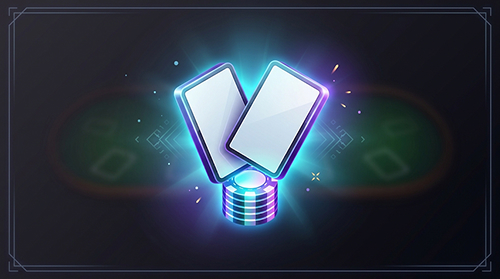
Blaqjack
Classic blackjack with a twist: the player can choose to play as the bank.
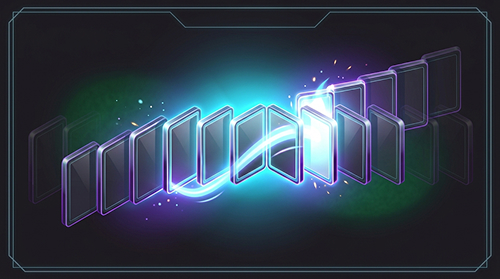
River
The final game of the twelve — build the longest possible run.
The pattern
Claude Code almost always knew the genre's base mechanic. Every personal rule on top of it had to be described precisely — that took time, but it consistently landed on a solid result.
A Pause for Sound
Building Rhythm Runner made it obvious how much music mattered to how a game feels. Development paused on new games while time went into sourcing music and sound effects for the entire library — not an afterthought, but a deliberate step before moving on.
Bringing the UI to QUBIC
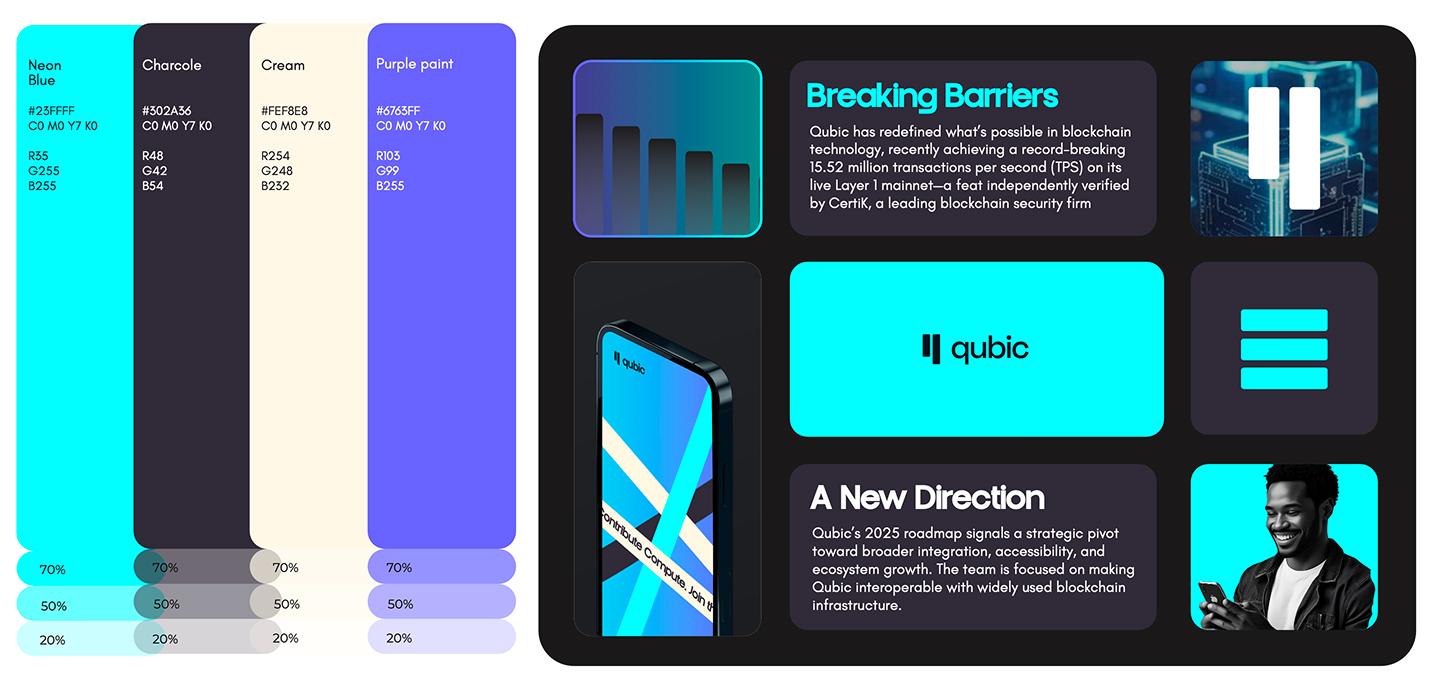
The arcade theme had been left untouched since the first prototype. Once the concept was proven, the platform needed to feel like part of the QUBIC universe, not a generic arcade skin. I pulled the QUBIC brand kit and directed Claude Code toward a closer visual match — specifying button styles, tab behavior, and transparency treatments by hand.
Backgrounds, thumbnails and imagery were produced with a mix of Gemini and Figma. This pass was roughly 50/50 — a fair amount of manual design work outside of prompting.
One practical limitation: Claude can't generate images yet, so every visual asset meant a trip outside the workflow — to Gemini or ChatGPT — before bringing it back into Figma. It works, but it adds a real step to the process rather than staying in a single tool.
In hindsight, this should have happened right after validating the first game — not after building out six of them.
A Design System Living Inside Claude Code
One Page, One Source of Truth
The idea started as a simple reflection, never built out in Figma: manage the design system directly where the code lives — a dedicated Design System page, built and maintained by Claude Code.
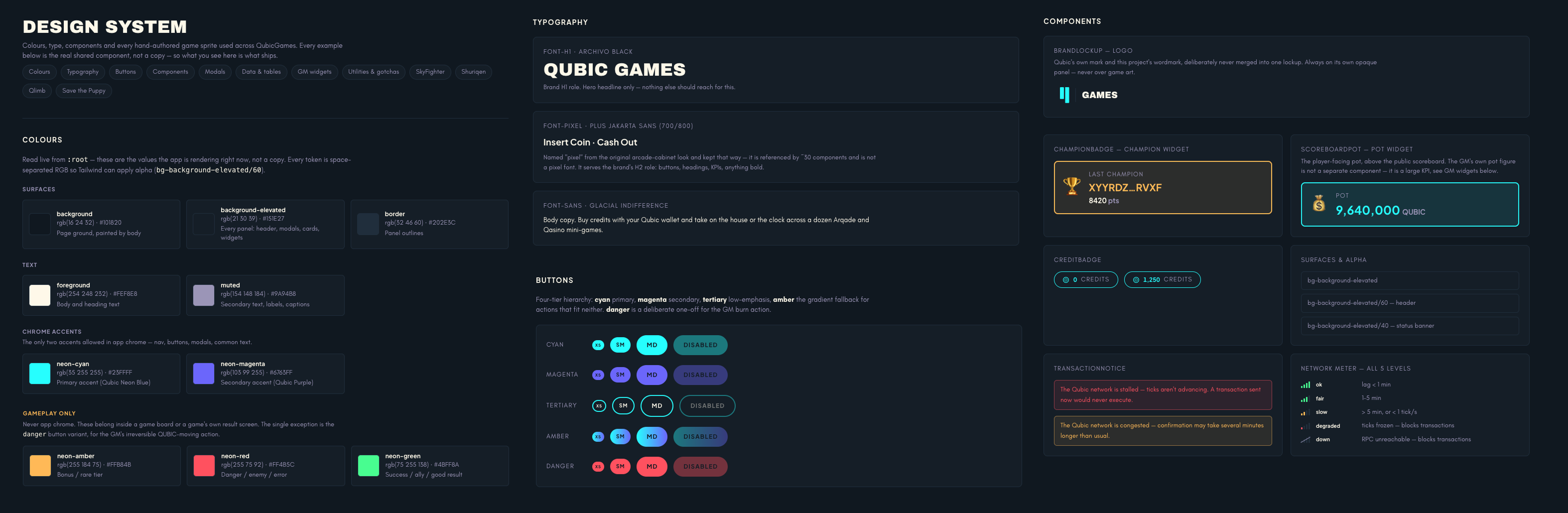
A Strong First Draft
Colors, type and a handful of components came out solid on the first pass — but the library still needed a fair amount of manual component requests on top to feel complete.
Fake Components
Some "components" turned out to be built on the fly rather than reused as real components — and the dataviz elements followed their own, inconsistent sizing rules. Both needed a dedicated cleanup pass.
Live & Propagating
Every component is documented and testable live, not frozen in a Figma file. Ask for a change on the Design System page, and it ripples across the entire platform.
A real Storybook, running from a page Claude Code maintains — no more back-and-forth between Figma, Claude Design and Claude Code. It's all in one tool.
It's an easy shortcut here, since Claude Code owns the whole codebase solo — but the model still transposes well to a real team: a designer gives UI/UX direction, an engineer gives coding instructions, both inside the same tool, and Claude Code handles the rest.
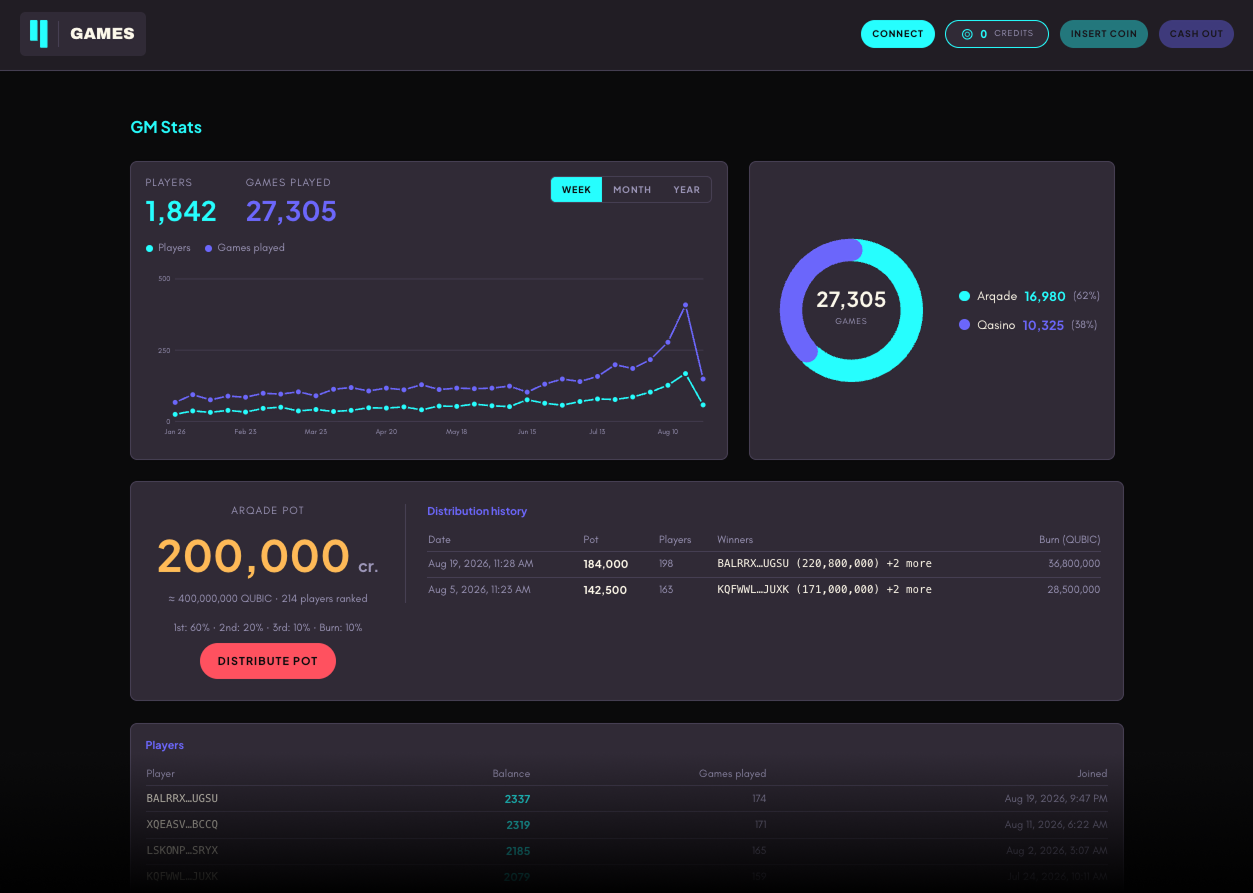
The Game Master Dashboard
Behind the platform sits an admin page for the Game Master — tracking players, watching how the two game modes perform against each other, and running the pot distribution to top players.
QA, Security & the AI Workflow
Testing Happy & Unhappy Paths
Before launch, every game was tested through both expected and edge-case flows. With twelve games' worth of non-standard rules, a fair number of bugs surfaced — and Claude Code handled fixing most of them well.
A dedicated security audit followed, with sub-agents detecting and correcting issues on their own — genuinely impressive to watch as a non-engineer.
Design Engineer, By Necessity
Not being an engineer, I trusted Claude Code on the technical stack and the Supabase foundation — but building this refreshed a lot of ground knowledge: domain names, databases, SQL, DNS.
The UX direction, though, stayed mine to lead — explaining intent, not implementation, to an engineer that needed a lot of context and very little time to build.

Giving the Platform a Voice
Promotion needed its own identity, so an X account was opened under the Game Master's name to carry the platform's voice and drive awareness within the QUBIC community.
Next step: automating part of that presence — starting with a tweet whenever the pot is shared out and reset, so the Game Master reports on the platform's own activity in real time.
@QubicGamesCom north_eastGallery
Outcomes & Impact
12 fully playable games shipped, across two distinct game modes
XX players and XX games played since launch
First version live in two weeks, solo, with Claude Code
A working wallet-connected credit economy built on the QUBIC SDK
A full QA and security audit pass ahead of launch
A community project supporting the QUBIC blockchain, with no official affiliation
Reflection
Looking back, I should have spent more time on product concept and UI direction right after validating the wallet flow and the first game, instead of building six more games before revisiting the UI. Everything got built as we went, with some avoidable back-and-forth along the way.
Still, leaning on Claude Code's capabilities let me build a project entirely from scratch, on my own. It took a lot of iteration to get the UX exactly right — closer to briefing an engineer than prompting a tool. The difference: Claude Code needs a great deal of explanation and very little time to implement, where a human engineer needs good specs, less explanation, but far more time to build.